What exists today
A video cataloging.
Microbiome stool tests catalog which species live there. Endoscopy filming, or camera-capsule filming, records visible damage. Both arrive after the ecosystem has already shifted, diagnostic not predictive.
GLP-1s are for your physical health, what AI is for your digital wealth.
Digital Gut Twin™ is building the most comprehensive database on gut physiochemistry and its relationship to GLP-1, its efficacy and its side-effects.
GLP-1s are dealing with "lifestyle" disorders in a way that our ever more intelligent brains and computers have not been able to do: take control of our food cravings, addictions, mood.
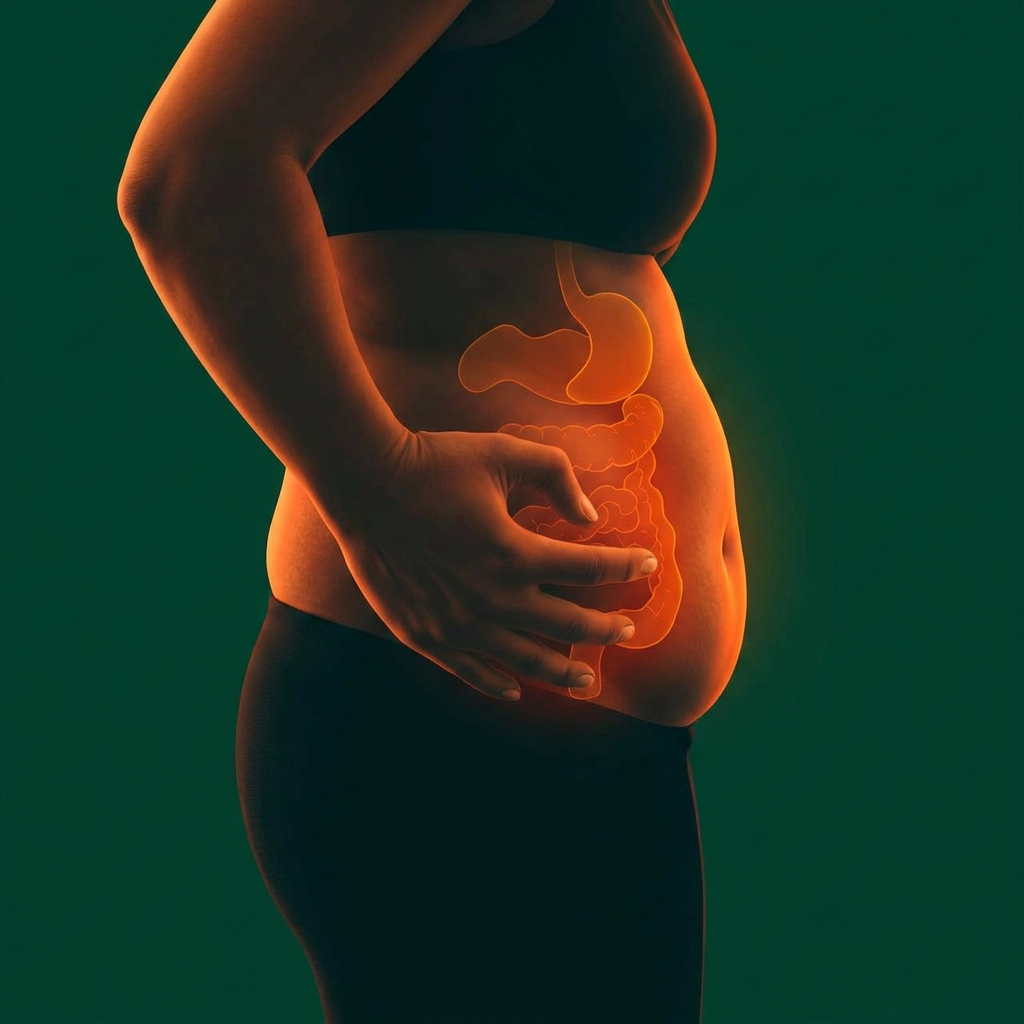
GLP-1: Gut-active hormones
"Every reaction comes with a counter-reaction."
Buying GLP-1s is becoming cheaper (generics) and more accessible (telehealth), however staying on them is the hard part. 1 in 2 quits within the first year.

A marine biologist studying a reef doesn't just photograph the coral or catalog the fish. They measure the water - pH, oxidants, nutrients - because chemistry shifts before the reef starts bleaching, before species disappear.
What exists today
Microbiome stool tests catalog which species live there. Endoscopy filming, or camera-capsule filming, records visible damage. Both arrive after the ecosystem has already shifted, diagnostic not predictive.
Digital Gut Twin™
Continuous pH, redox (ORP), core temperature, and motility, the upstream chemistry that shifts before symptoms, before disease, before the reef bleaches.
In partnership
We partner with the Stanford Genomics Center - one of the world's leading multi-omics groups - to connect the chemistry we measure in-vivo with the genetic, microbial and metabolic signals that explain it.
Connecting the dots for root-causes.
The approach
Continuous acid–base profile across every GI segment, capturing gastric output, bile and bicarbonate response, and colonic fermentation depth.
The electrochemical fingerprint of microbial metabolism. Reveals fermentation health, oxygen leakage, and dysbiosis signatures invisible to any stool test.
Circadian rhythm and digestive thermogenesis measured from the gut itself - the body's true central clock.
Segmental transit times and peristaltic patterns from a 9-axis sensor, capturing not just how long but how variably food moves.
The Digital Gut Twin™
Raw sensor streams feed a layered model - first extracting 40–60 derived physiological features (gastric pH kinetics, ileocecal ORP delta, transit variability, circadian amplitude), then fusing them into a dynamic personal model that updates as you live, eat, dose, and sleep.
The result is the first computational substrate for personalization that actually works - across GLP-1 response, metabolic health, hormonal cycling, gut conditions, longevity protocols, and preventative care.
What it powers
One Digital Gut Twin™ across many indications. The same continuous physiochemistry that explains a GLP-1 responder also explains an IBD flare, a perimenopausal metabolic shift, or the earliest signal of decline.
See all use casesAdherence, side-effect mitigation, efficacy, and maintaining results after taper.
Glycemic response, fermentation patterns, and the gut–liver axis.
IBS, IBD, SIBO, and functional GI disorders measured continuously, not retrospectively.
Cycle, perimenopause, and HRT response read through gut physiology.
Circadian alignment, inflammation load, and metabolic flexibility tracked over years.
Earliest detectable shifts in physiology - before disease, before symptoms.
Why now
Ingestible sensor capsules have crossed the cost and miniaturization threshold for consumer use.
GLP-1s have made an entire generation expect, and pay for, often out of pocket, measurable and personalized metabolic outcomes.
AI models can now fuse multi-channel time-series biology into actionable, individualized guidance.
Opportunity
GLP-1 is a $150B category by 2030 with no measurement layer. Personalized nutrition is racing past $90B, longevity past $40B, and women's health is one of the fastest-growing pharma segments of the decade. Each is bottlenecked by the same missing input: continuous, in-vivo physiology. The first company to make the gut measurable in real time owns the substrate the entire category has been waiting for.
FAQ
This is where most personalized health ventures fail - they generate data but lack a coherent framework to act on it. We ground our recommendation engine in a phenotyping system that has survived millennia of clinical observation: the Ayurvedic constitutional framework of Vata, Pitta, and Kapha.
Stripped of metaphysics, this is a three-axis classification of digestive, thermoregulatory, and motility phenotypes - essentially an early, observation-derived clustering of gut physiology. Modern sensor data lets us do what Ayurvedic physicians did by hand for two thousand years, but with quantitative precision: place each user on a continuous (Vata, Pitta, Kapha) probability vector based on their actual measured pH dynamics, ORP gradients, transit variability, and circadian temperature signatures.
From there, recommendations become specific and grounded - not generic. We use ancient pattern recognition as the interpretive layer; modern biosensing as the measurement layer.
Today we are cleared to run paid clinical studies in Europe under ethical-committee approval - generating the longitudinal data that trains our model.
Our market entry is a 510(k) filing using Medtronic's SmartPill as the predicate device: same pH sensor, same human safety record, same motility and whole-gut transit-time measurements. That unlocks selling into GLP-1 providers to monitor gastric delaying and severe constipation - two of the most prevalent GI side effects of these drugs.
With the model trained, we run a smartly designed clinical trial: GLP-1 with vs. without precision dosing guidance and personalized nutrition - measuring not only side-effects, but efficacy and overall wellbeing.
The round
A €5M seed round secures the sensor manufacturing and brings the per-capsule cost down, funds the first Digital Gut Twin™ model, and backs the founding team. It carries us to the inflection point that unlocks our Series A: a 1,000 to 5,000 capsule longitudinal dataset, with outcome data across GLP-1, metabolic, and gut indications.
Target round
€5M
Capsule dataset
1,000
Runway
16 months
Our target. Fully funds the pivotal study, the first Digital Gut Twin™ model, and the founding team.
Strong round
€6M
Capsule dataset
2,500
Runway
17 months
Oversubscribed. Doubles the dataset, deepens the Series A milestone, extends runway.
Optimal round
€7M
Capsule dataset
5,000
Runway
18 months
Optimal scenario. Multi-indication dataset out of the gate, faster moat, broader Series A optionality.
Once the €5M target is closed, we open a dedicated allocation for angels who want to back the data and intelligence layer of the gut.